

Ginen I Halom Tåno’: Reflections on Our First Mentored Hunt
Where does our food come from? What work goes into producing it? And when it comes to meat, what gratitude is given to the life that feeds us?
These reflections hit a little deeper after this past weekend, when our Ginen I Halom Tåno’ program hosted its first mentored pig hunt here at the GSC Food Resiliency Hub. The program supports local agriculture development by training new and youth hunters to safely, responsibly, and ethically depredate feral pigs. After attending a full day hunter safety course, program participants were invited to participate in the first in a series of monthly, mentored hunts here at the Hub.
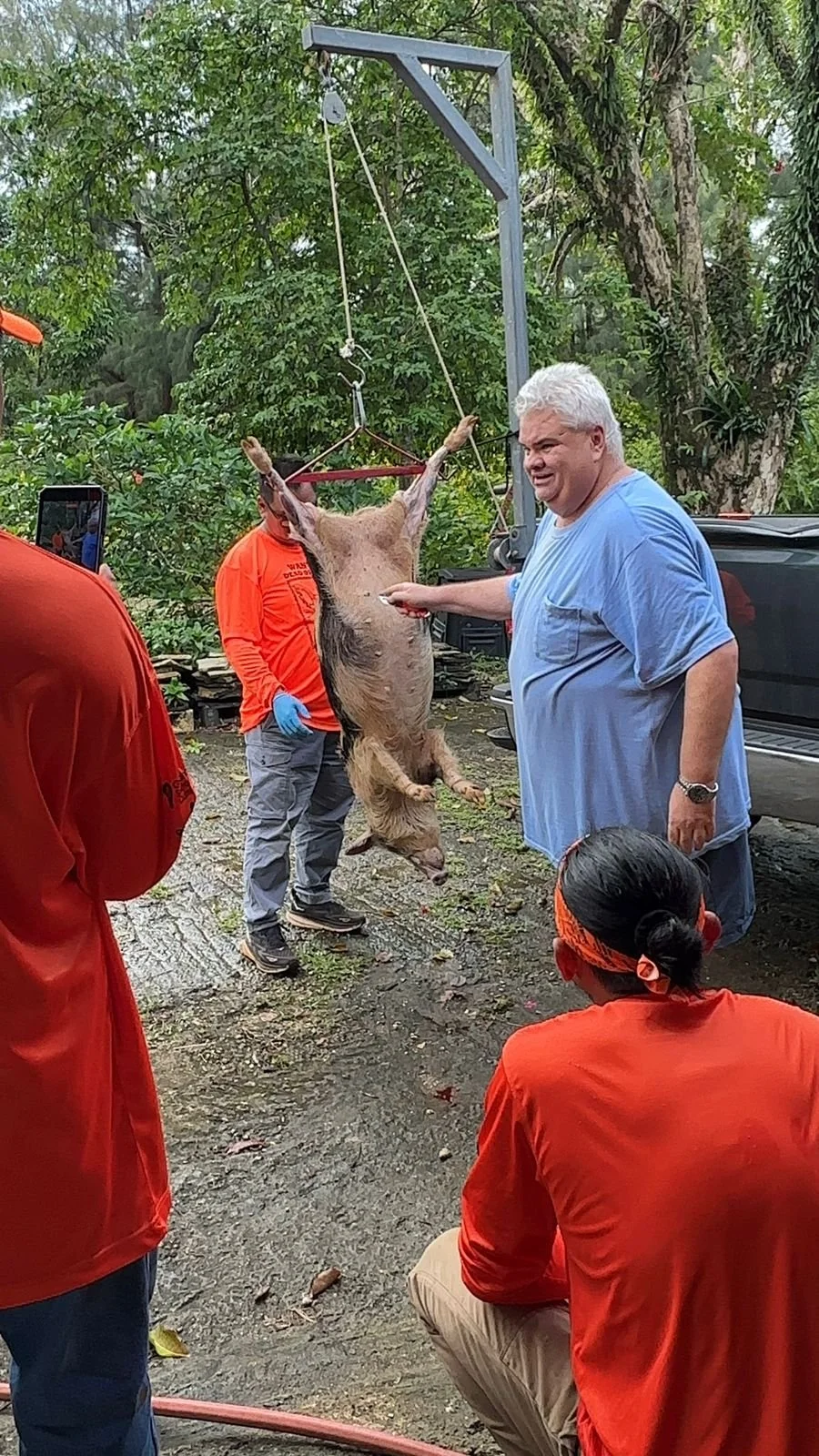
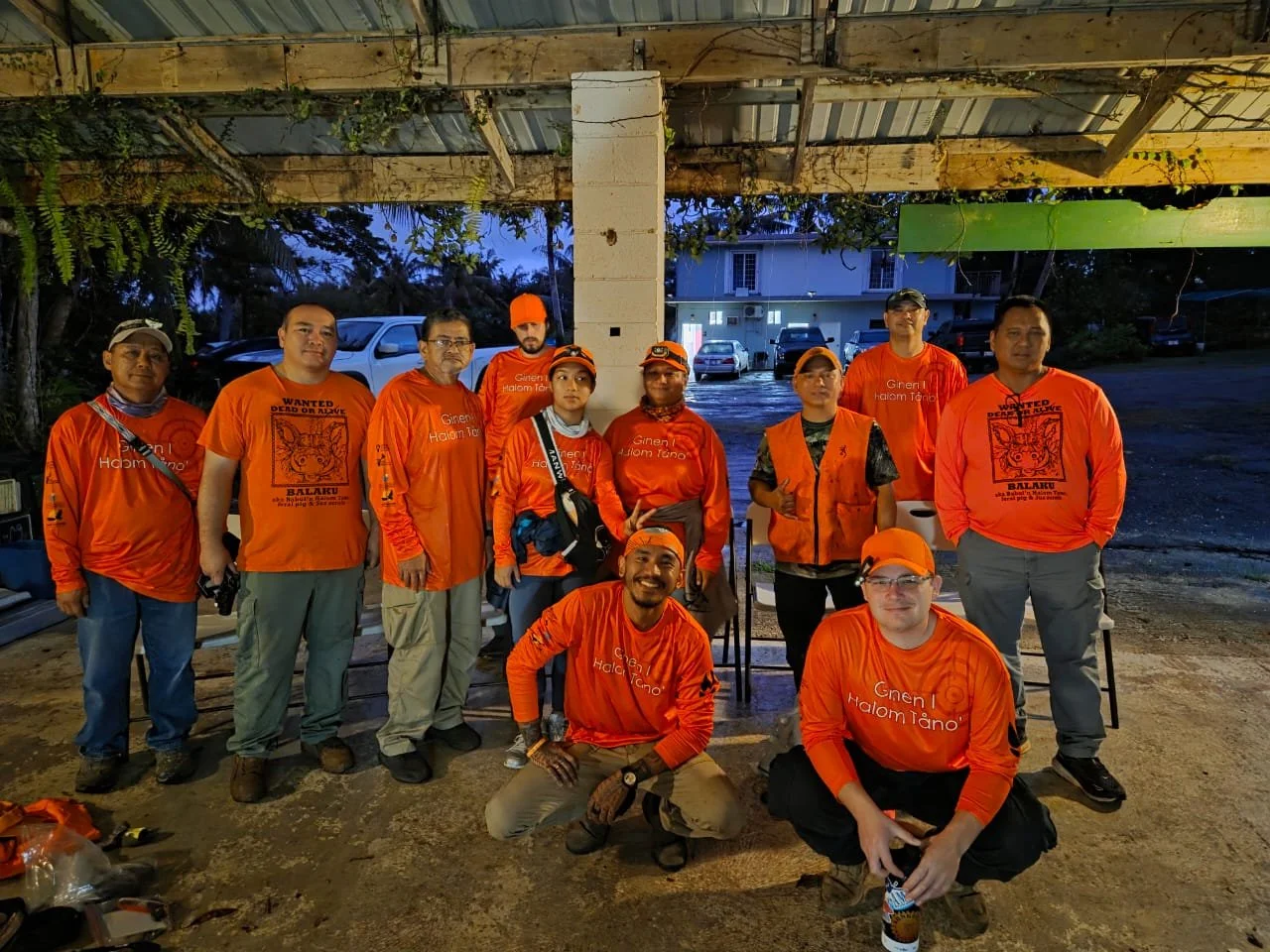
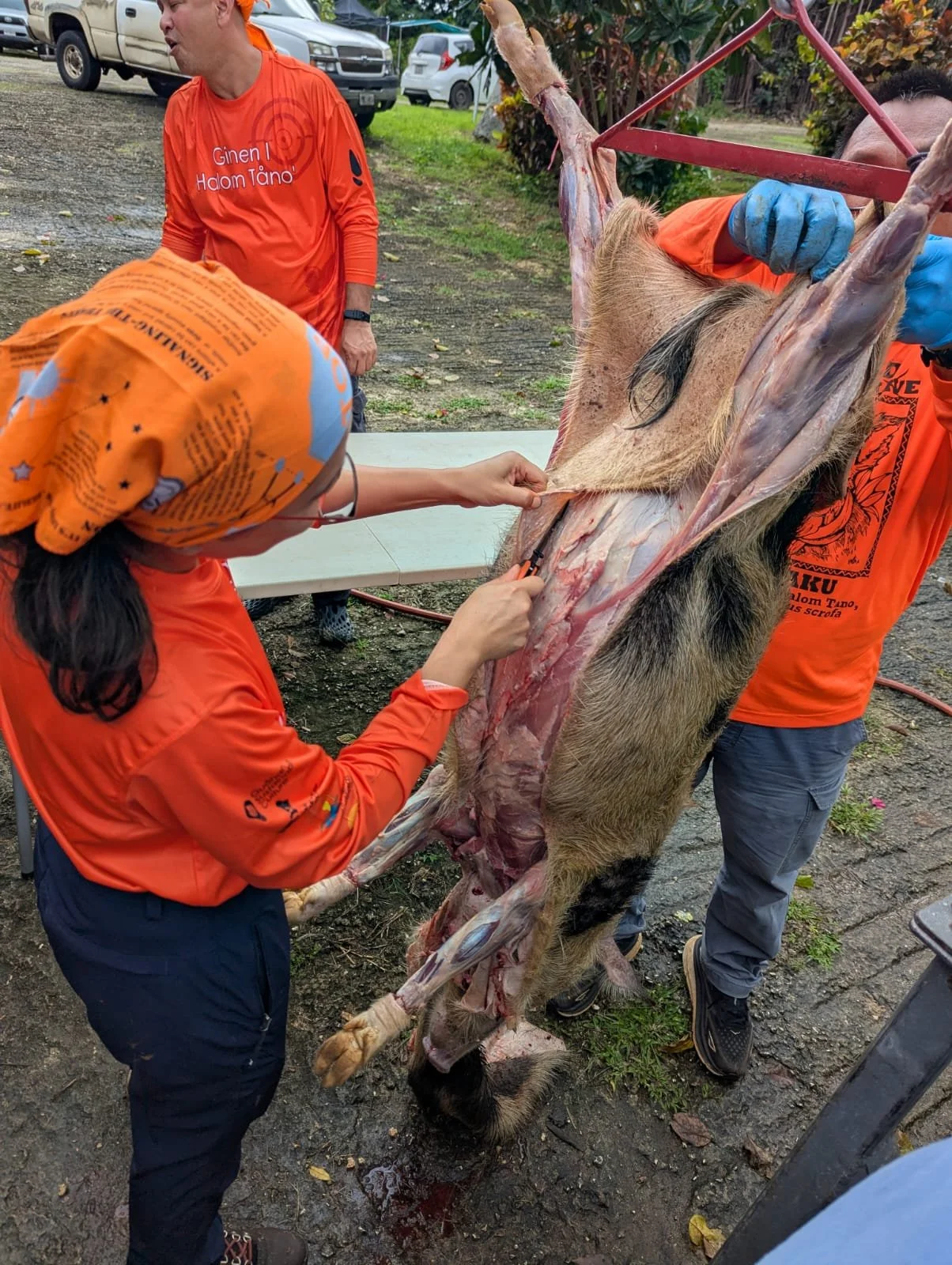
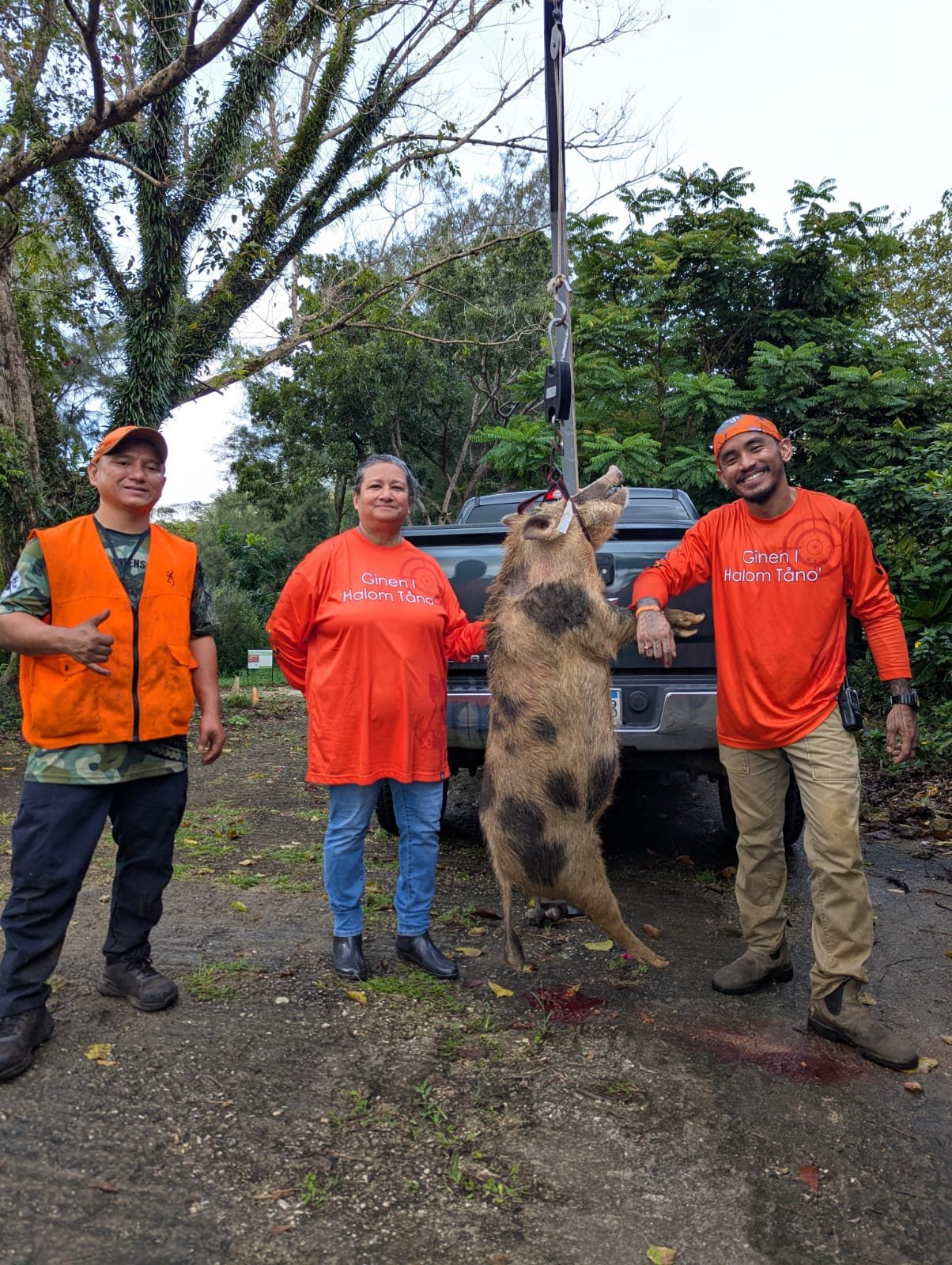
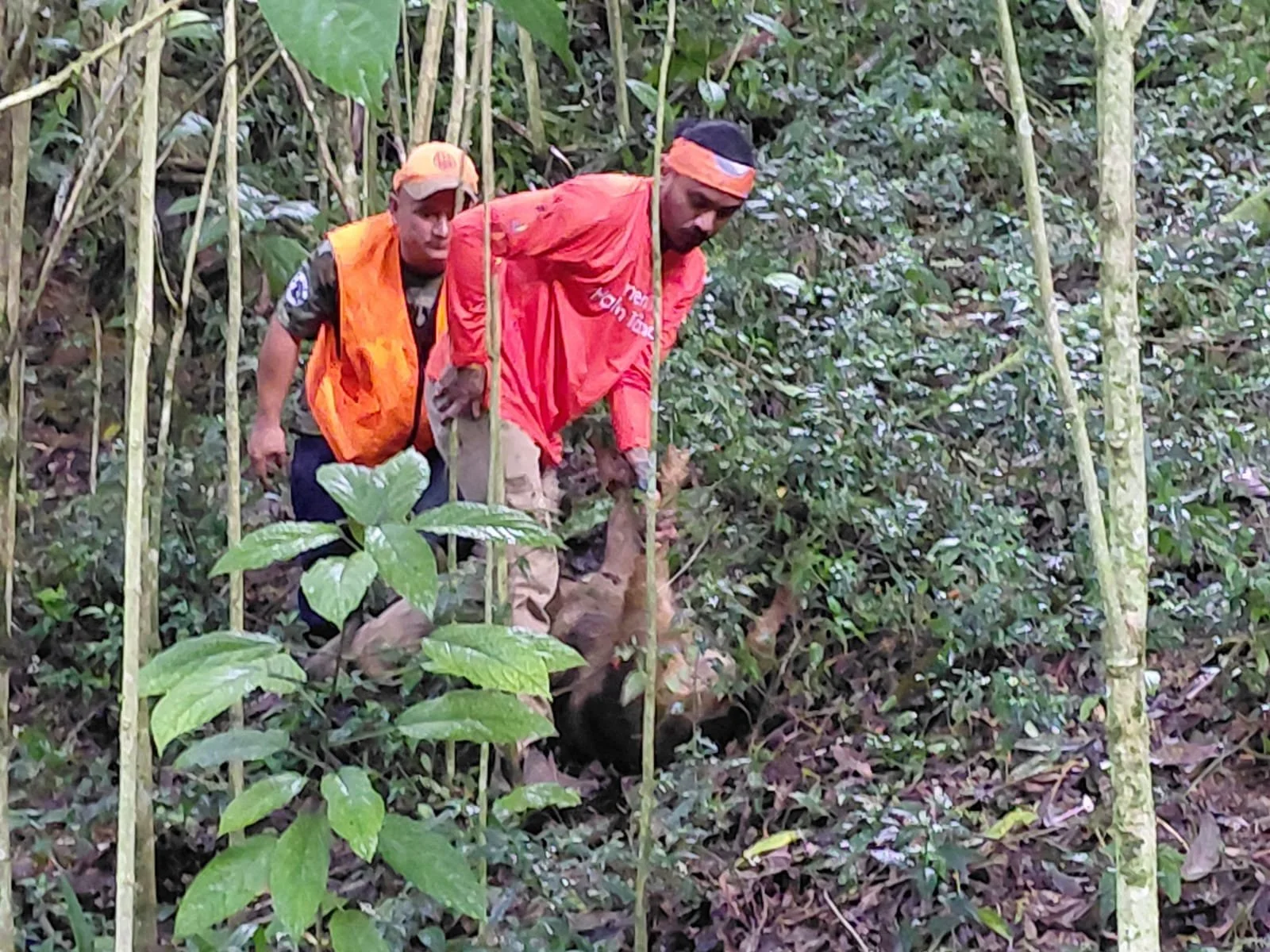
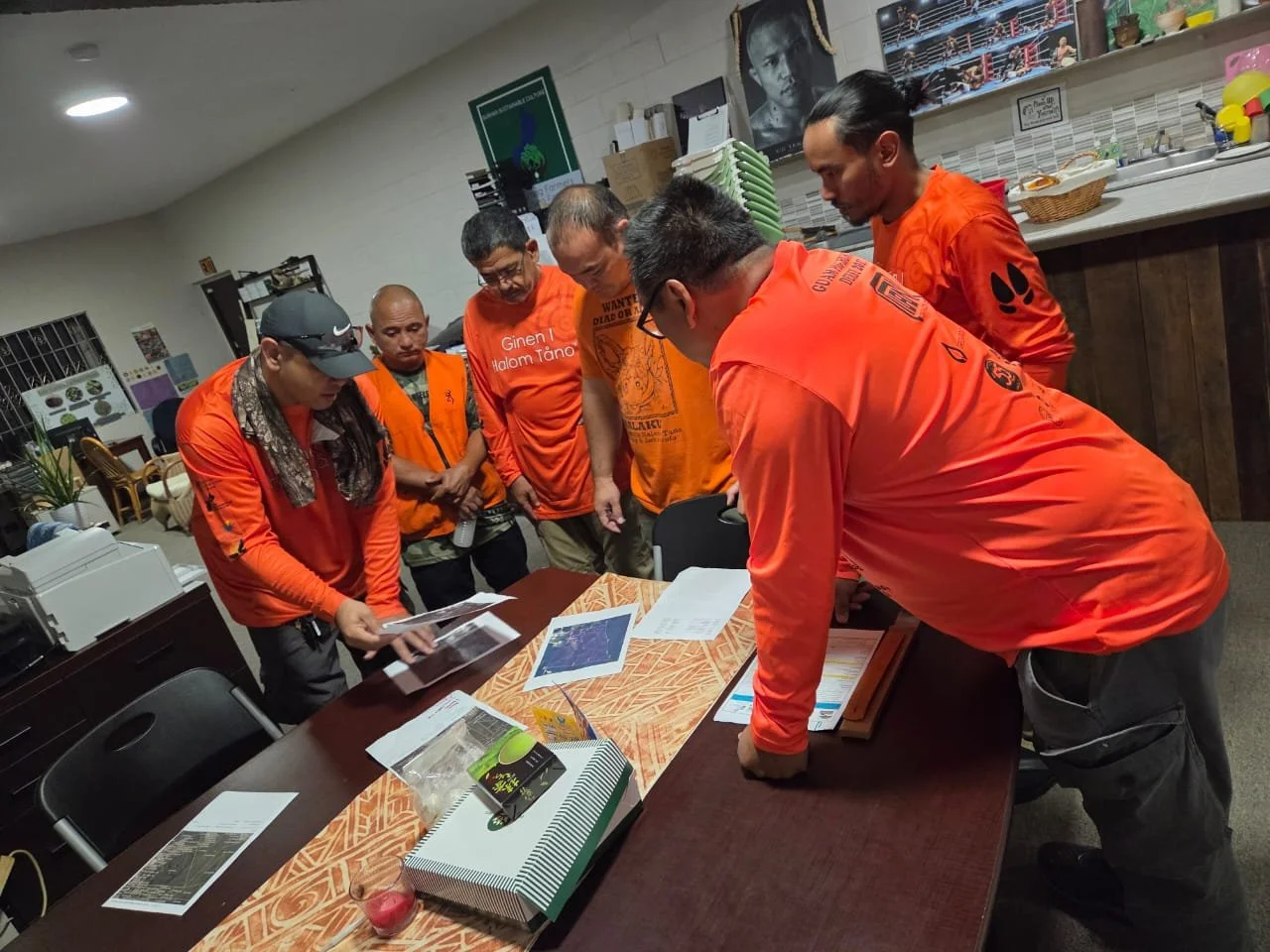
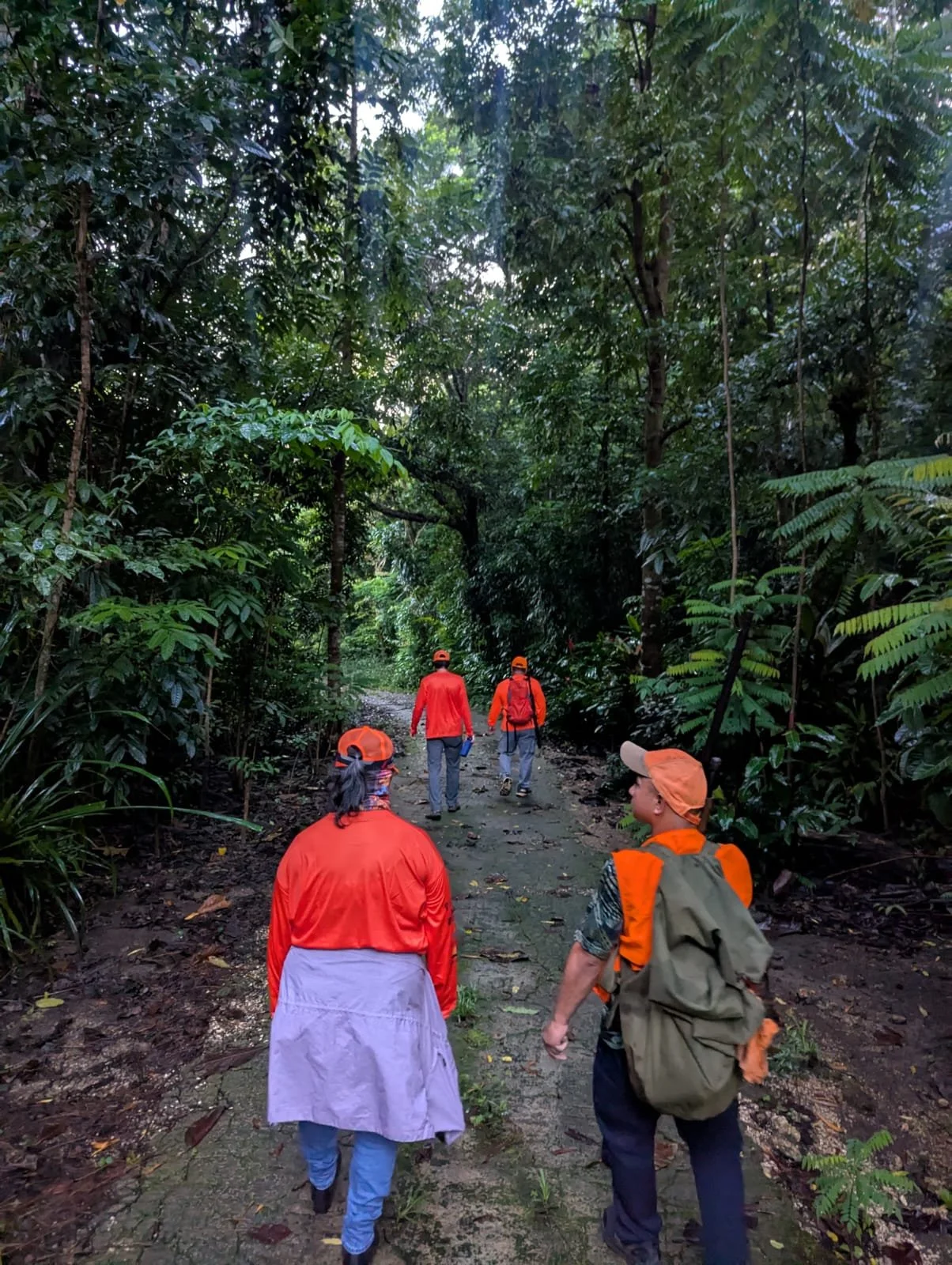
The hunt began just before dawn with our experienced hunting mentors leading participants into separate hunting zones on the property, which we baited with grocery store food waste that otherwise would’ve gone to the landfill. While on the hunt our mentors shared their insights and experiences from years of hunting on Guåhan, and we successfully removed two pigs from the property.
When the ceasefire was called, the hunting groups returned to learn how to butcher wild game meat. We learned how to examine the organs to determine the general health of the animal, different methods to process and portion the meat, as well as how to safely store the processed meat and responsibly discard unused parts of the animal. We harvested about 65 lbs or 130 meals worth of meat, which we shared with mentors, participants, and team members.
This weekend’s hunt was a humbling experience that gave us a deeper appreciation of where our food comes from and the work it takes to produce it, as well as gratitude for the life that helps sustain us.
The growing wild pig population poses a serious threat to local agriculture, and while GSC is doing its part to mitigate that threat by training new hunters, it’s clear that Guåhan needs more systemic solutions to make a meaningful impact. Whether through trapping, depredating, or hunting, we as a community need to do more collectively to overcome this challenge to local agricultural development.
Saina ma'åse' to First Nations Development Institute for funding this program, Guam Department of Agriculture Division of Aquatic and Wildlife Resources for their partnership, our volunteer hunting mentors and instructors, and all participants for making this first hunt a success.
